Overview
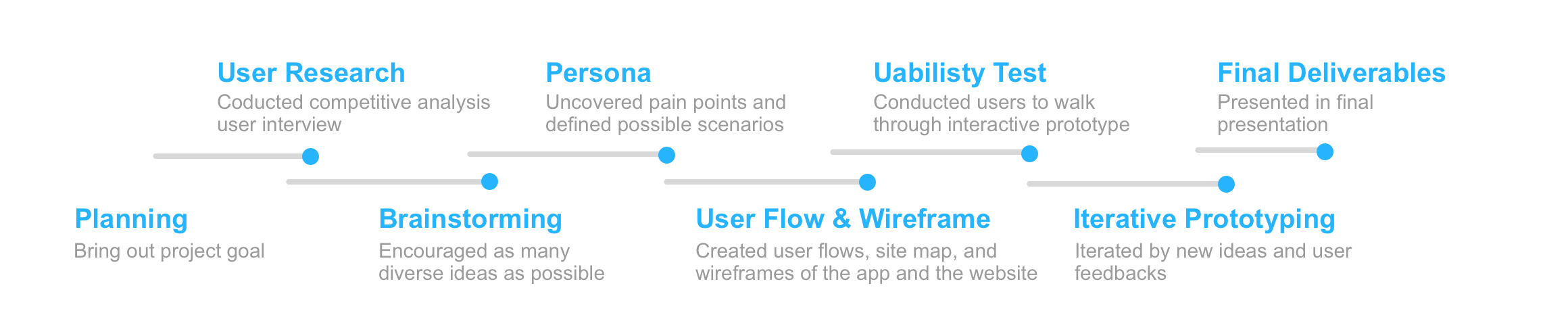
Trip Tutor(助旅) is the final deliverables of my 10-week project for Foundational User Centered Design Methodologies with Yiyun Long and Yixuan Long. Trip Mate is an app aimed at helping users traveling oversea with language, exchange rate, and transportation problems etc.
Planning & Managing:
➭ I made plans and tracked the process of the project
Communication:
➭ I handled the communication with interviewees (in-person, emails, and video-calls)
➭ I organized our preparation for every presentation to show our findings and final designs to our mentor and classmates
Research & Design
➭ We drafted interview questions together and conducted nine interviews with our target users.
➭ We did intense user research and presented the research results in the class.
➭ We generated insights from the research and used them to guide our design.
➭ We collaborated and delivered personas, scenarios, user flows, IA, wireframes, and a fully click-through prototypes.
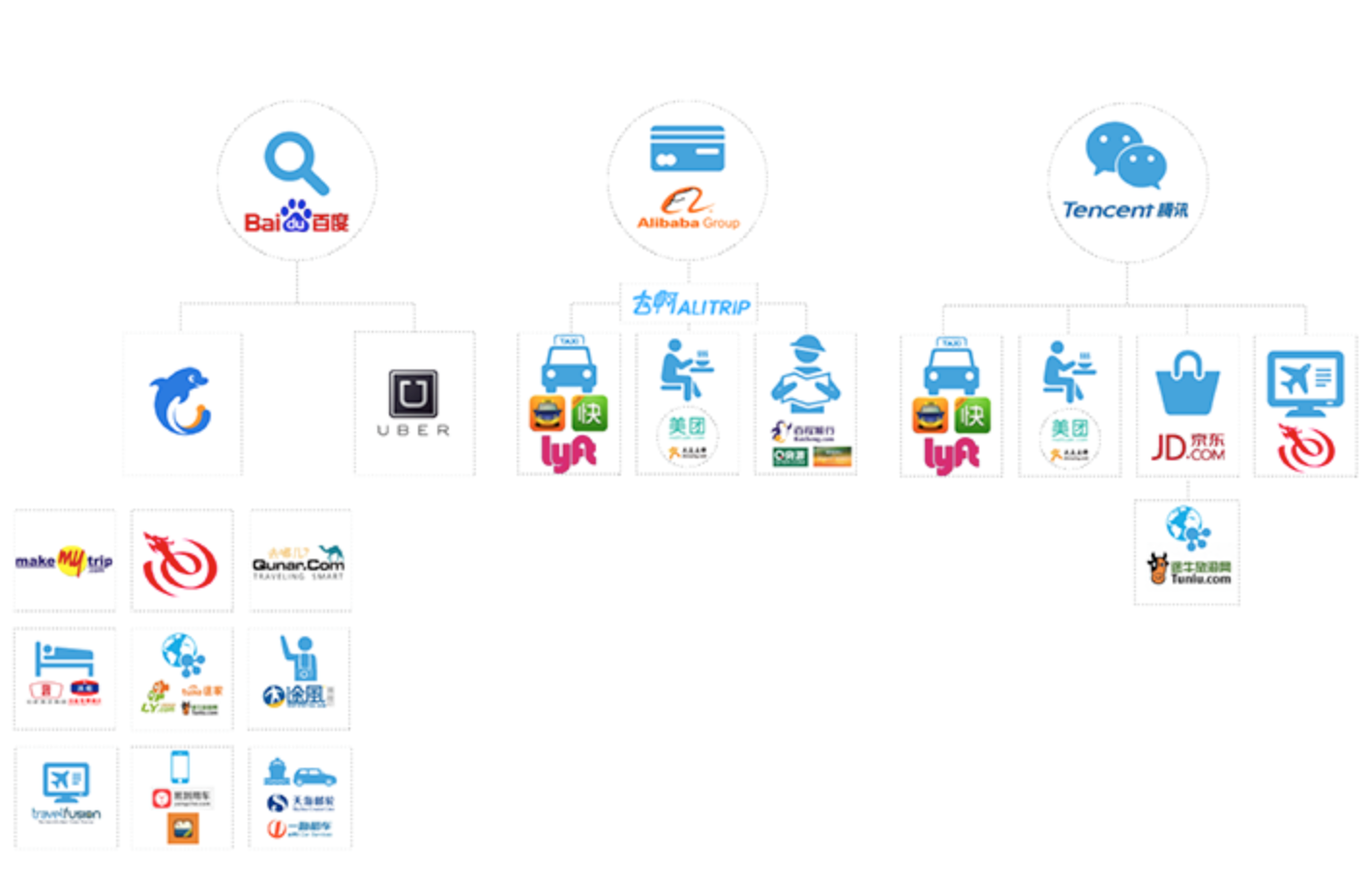
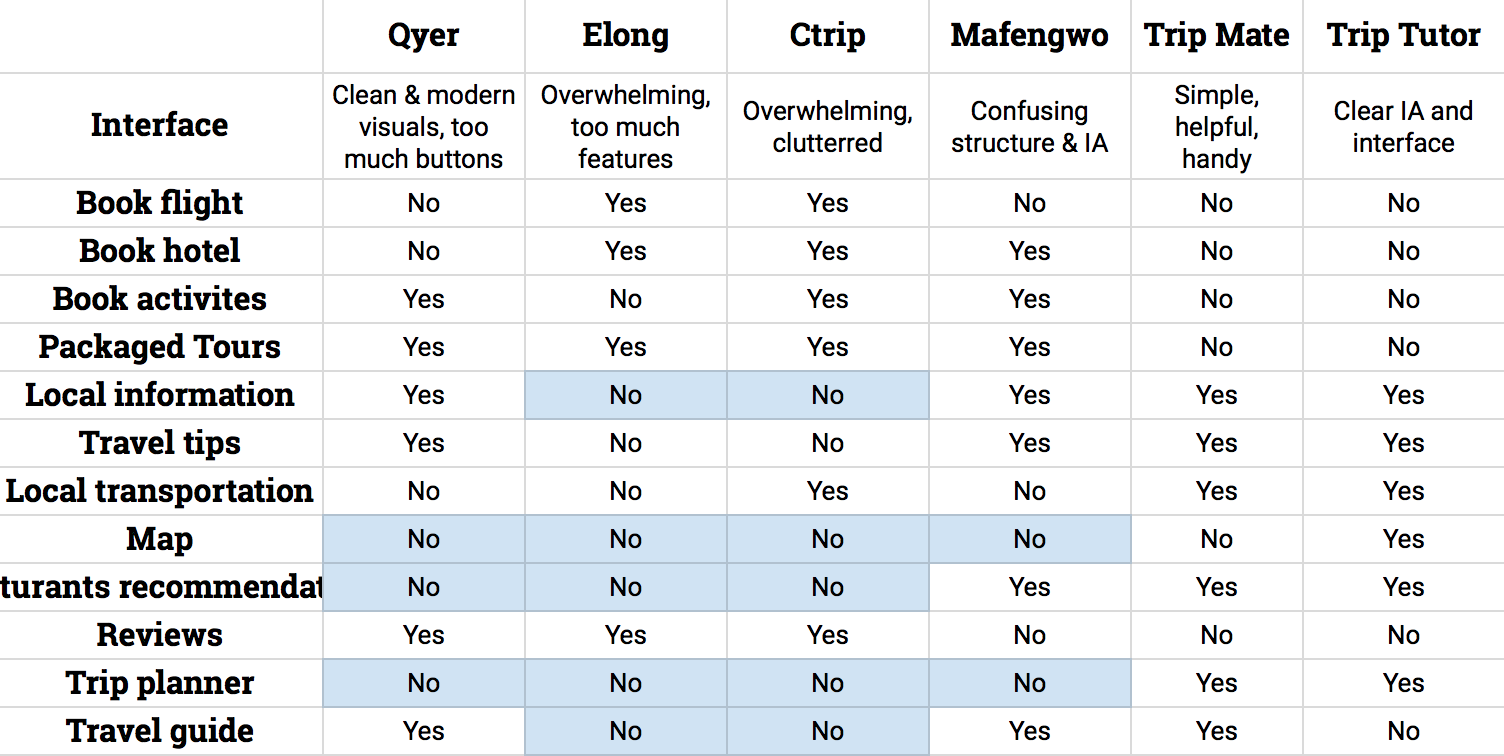
Competitive Overview; User Interview; Persona; Wireframe; Prototype; User Testing; UI Design
The Tools
Google Sheet; Keynote; Sketch; Flinto; Adobe Xd

Background
In china, most people prefer to choose packaged tour. Some possible reasons are listed below:
➜ Packaged tour saves a lot of time and energy.
➜ Packaged tour can arrange appropriate routes using their own resources, which will include the most recommended sights.
➜ People do not know where to find traveling resources and are not confident about making traveling plans by themselves.
➜ People think that making traveling plans by themselves is time-consuming, especially for those who are under working pressures.
But people also realize that packaged tour is not able to personalize their individual needs and will cost lots of unnecessary time and energy. Therefore, teaching people how to make traveling plans by themselves is really needed in China.
➜ Teach users how to travel oversea by themselves
➜ Provide support when users have language problems etc.
User Research
We identified our target users at first.
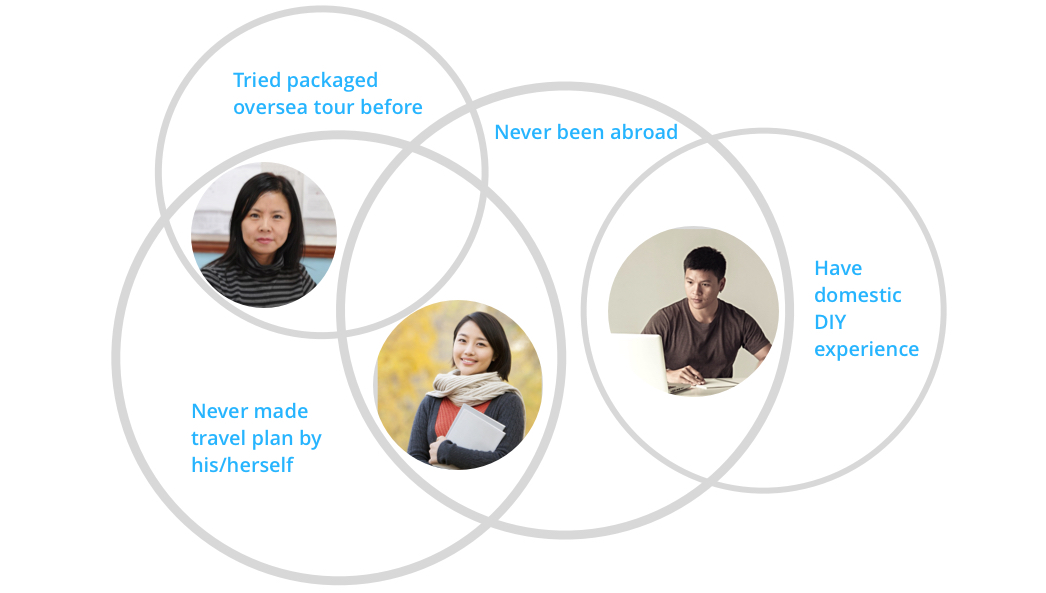
We defined 3 user groups and interviewed 9 people (3 for each group). For each interview, we scheduled a 0.5 hour session to talk about their needs, goals. Then we analyzed the results with needs, knowledge of the subject and experience/preferences.
We concluded that:
Needs and Interests of User:
1. All the users concern the safety problems and issues.
2. All the users concern the budget problem. Even though, they do not have specific numbers of the budget. They want to control the traveling budget within certain limits.
3. All the users travel abroad for different culture and traditions.
4. Most of the users concern food. It is one of the important factors that influence their trips.
5. All the users are worried about unexpected situations. The experienced traveler thinks he can avoid these situations by doing more research. The traveler who prefers packaged tours and the inexperienced traveler think you can not foresee all the situations and can never avoid them.
6. Most of the users think making travel plans take a lot of time. This is one of the most important reasons that they do not want to travel by themselves.
7. For Chinese tourists, applying for a Visa is complicated. They choose travel agents because of the convenience of the Visa application.
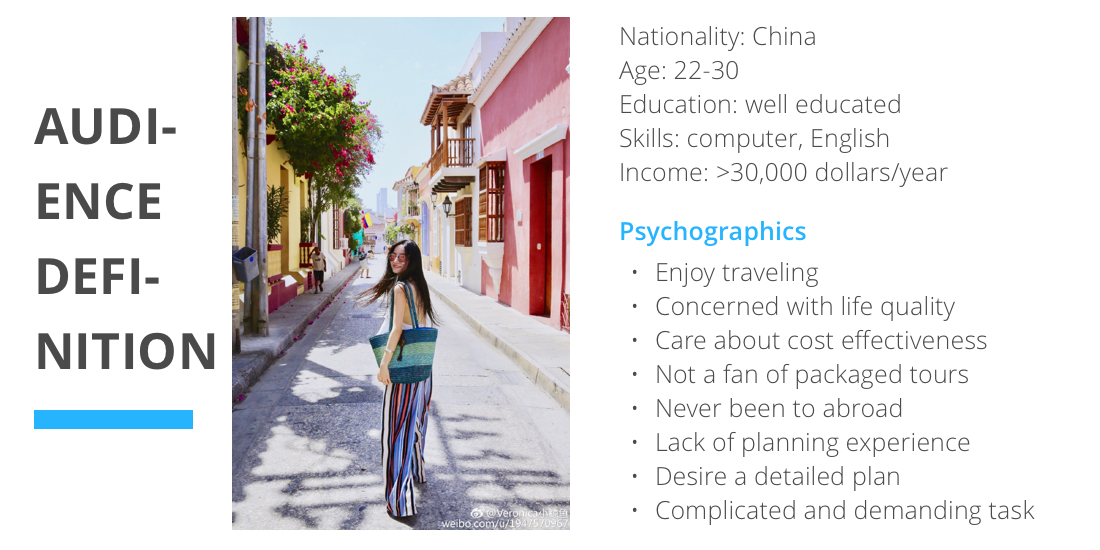
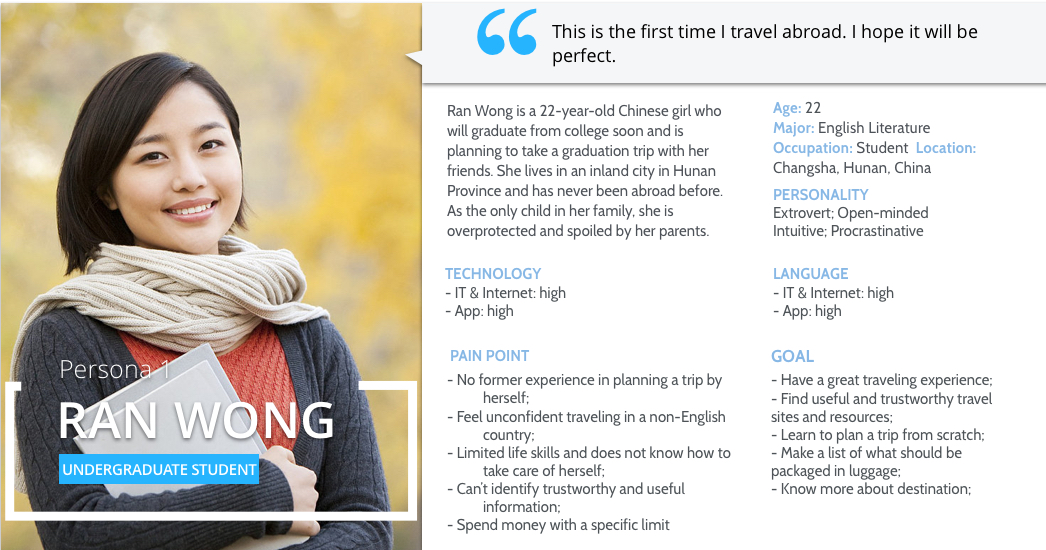
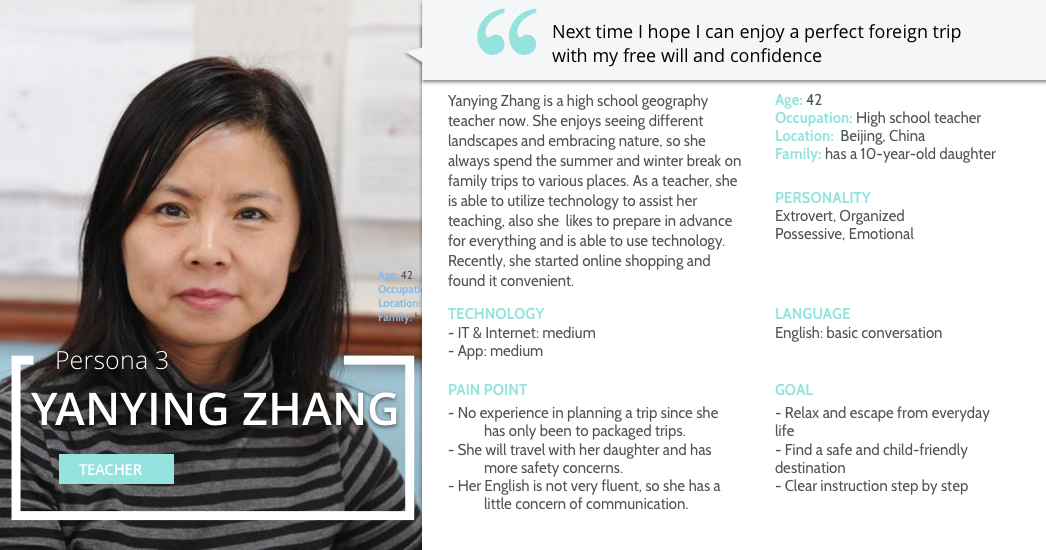
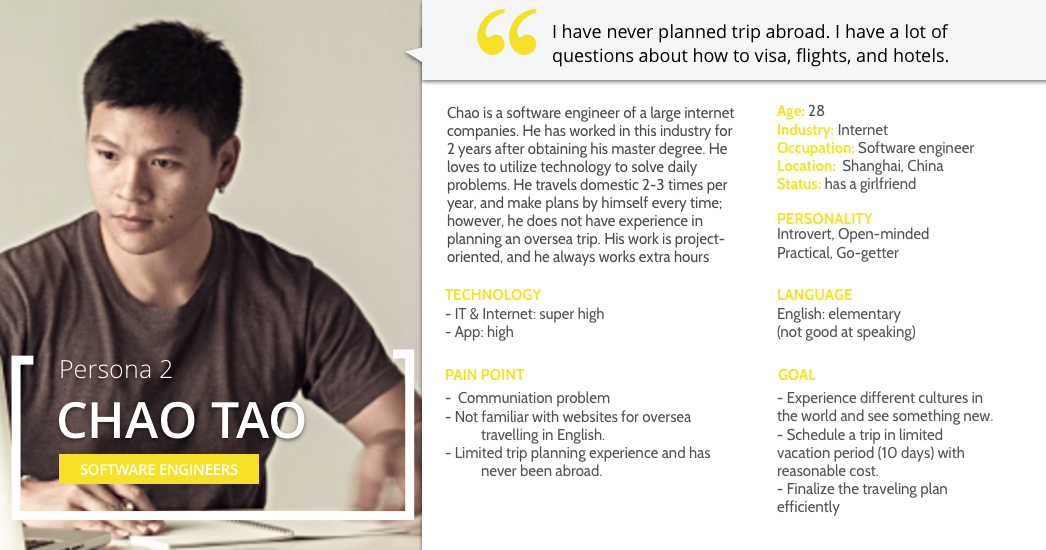
We identified three user groups based on our user research. According to each user group, we created three personas. The three personas represented our core customers.
We brainstormed ideas and sketched out key interfaces to test with users.
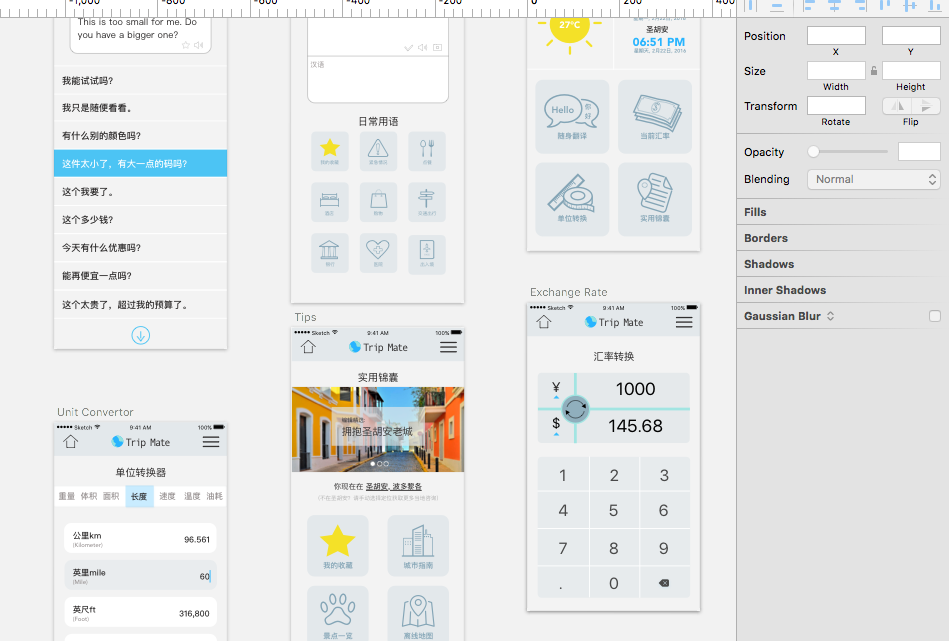
The following is a series of paper prototypes showing the main interface of Trip Mate
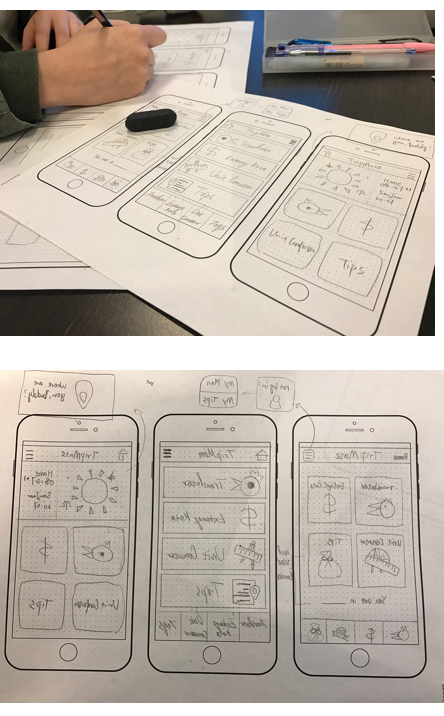
Iterations
We conducted user testings with our prototypes and got useful feedbacks. Based on the feedback, we modified our designs and created a series of high fidelity prototypes.
Feedback 1:
We limited our unit converter in length unit etc. Some users considered that they were more interested in shoe size, cloth size etc.
Solution 1:
We add these units users interested in in the final design.
Feedback 2:
Users found the menu at the bottom of the screen useless.
Solution 2:
We removed the menu and change the interaction design. Users can just swipe back to the home page.
Feedback 3:
The category of trip guideline at the top was not very coherent with the following card design.
Solution 3:
We move the category of trip guideline to the left of the screen.
Feedback 4:
Users thought there were too mange images in the home page.
Solution 4:
We changed images to more simpler icons.
We iterated and refined the design based several rounds of user testing. And the final design consisted of the following features:
✓ Provide necessary information before users actually start to plan their trip
✓ Card-design of trip planner
✓ Travel location suggested based on users’ preferences
✓ Handy features for tourists such as translator, currency converter, etc
✓ Local transportation reminder
✓ Real-time recommendation of restaurants
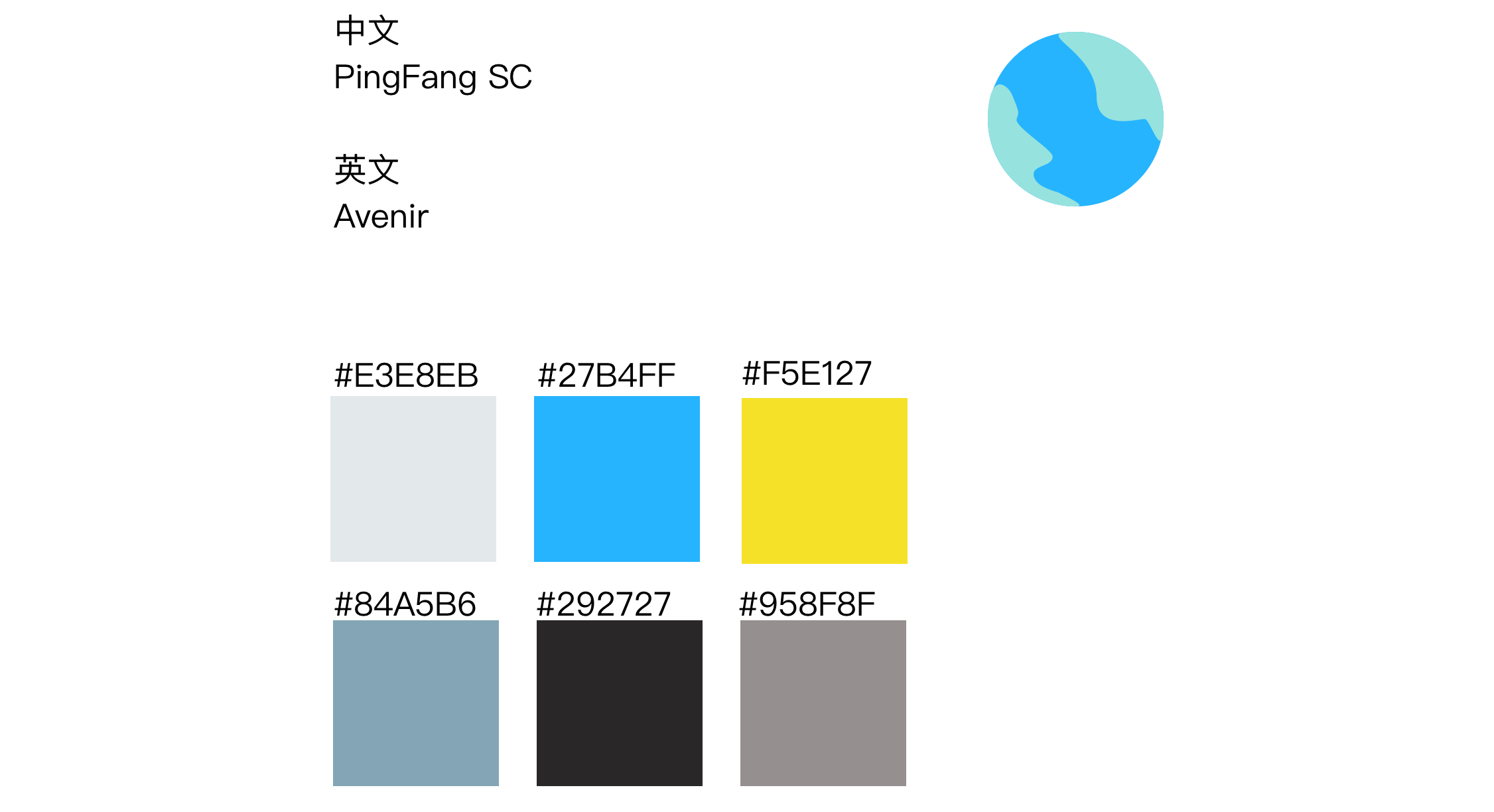
Design Guide
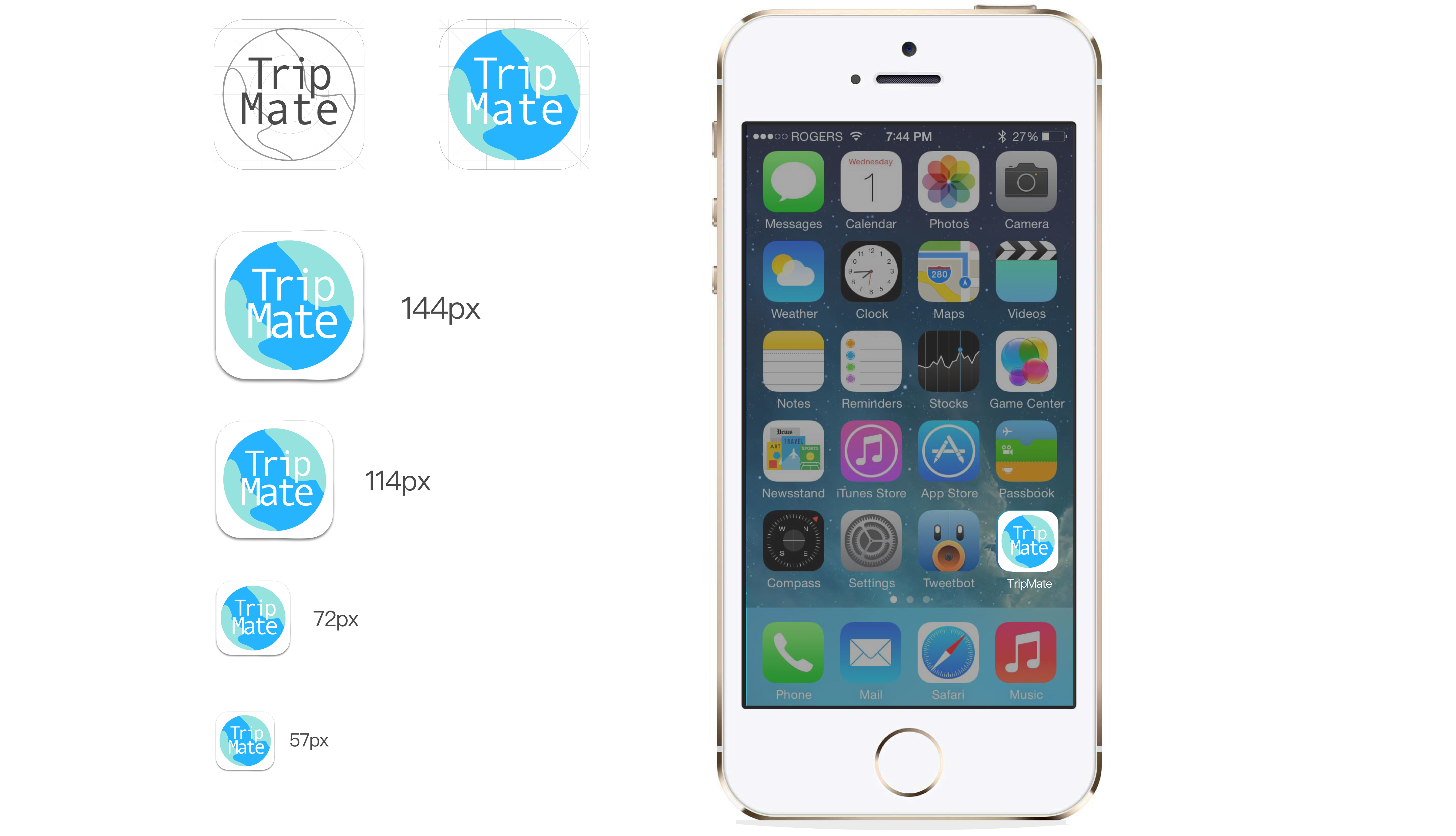
App Icon
![]()
Selected UIs

Interactive Design